
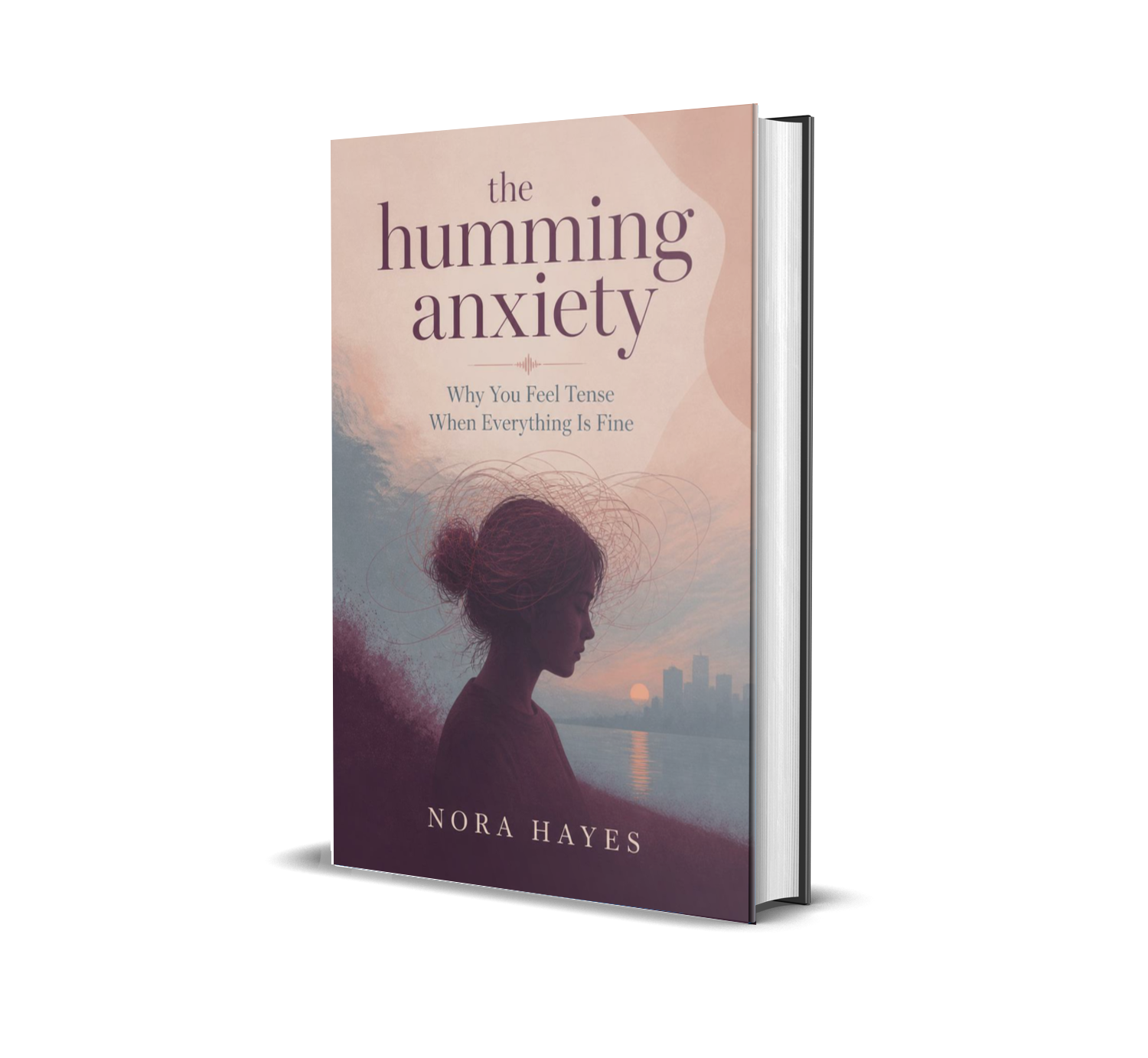
THE HUMMING ANXIETY
You have a good job, good people around you, and no real reason to worry. So why do you still feel tense? This is a quiet, compassionate guide to understanding the constant background buzz of high-functioning anxiety – without trying to "fix" you. For those who look fine on the outside but feel exhausted on the inside.
🔥 22 sold in the last 24 hours
RECOGNIZE THE HUM
That constant background buzz you've learned to ignore? It has a name. Learn to identify the quiet, persistent hum of high-functioning anxiety — the one that follows you even when nothing is wrong.

UNDERSTAND WHY
No dry science. No jargon. Just an honest, compassionate look at why you feel tense even when everything looks fine. Your mind isn't broken — it just works differently.

LIVE WITH IT
This isn't a "cure." It's a gentle guide to living alongside the hum — without shame, without pressure, and without pretending to be someone you're not.
ABOUT THE AUTHOR

ABOUT THE BOOK
It began as a quiet observation: that some of us feel tense even when there's nothing to be tense about. We wake up with a knot in our stomach, go through the day with a buzz in our chest, and fall asleep with a mind that refuses to quiet down. From the outside, everything looks fine. Good job, good relationships, good health. But inside, there's this constant, low-level hum that never fully goes away.
For years, many of us have been told that something is wrong with us. That we should just relax, think positive, stop overthinking. That if everything is fine, we should feel fine. But that's not how it works, is it?
What if nothing is wrong with you? What if the hum is just... there?
Written for the high-functioning anxious, the overthinkers, the ones who look fine but feel exhausted, these pages explore what it means to live with a background buzz that never fully shuts off. Through gentle reflection and quiet honesty, this book asks the questions we rarely have space to consider: What if your tension isn't a sign that you're broken? What if the hum is just part of how you're wired? What if you could stop fighting it and start understanding it?
But here's the thing, this book isn't for everyone.
It won't promise to cure you in 7 days or give you 10 steps to a worry-free life. It won't tell you to just breathe or think positive. It exists in the quiet spaces, waiting patiently for the right hands to find it. It was written for the ones who have never had a panic attack, but have also never truly felt at peace. For those who keep asking: "What is wrong with me?" The answer might surprise you.
Within these chapters, you'll find reflections on recognizing the hum, giving it a name, understanding when it's loudest, and learning to differentiate it from panic or breakdown. You'll explore where the hum comes from, the learned patterns, the societal pressures, the body that forgot how to rest. And perhaps most importantly, you'll discover how to live with it, not by silencing it completely (because that's often not possible), but by changing your relationship with it.
This book doesn't promise to fix you because you were never broken. It doesn't offer a roadmap to becoming someone new because the person you already are is worth knowing. All it asks is that you slow down enough to listen — to what the hum actually sounds like, to what your own body has been trying to tell you all along.
If you're in a hurry, if you prefer surface over depth, if you're not ready to sit with the uncomfortable parts of yourself — then close this book gently and walk away. It will understand. It won't follow. But if you've ever felt alone in a room full of people, if your mind has never fully quieted down, if you're ready to stop asking "what's wrong with me?" — then turn the page.
The hum has been waiting for you to notice it.
TALK TO US
Have any questions? This space is open to you. If you have a question, a thought, feedback, or simply want to share how the book resonated with you, feel free to reach out. We value conversation, because we believe the story doesn't end on the last page — it continues through the people who read it.